
ECG Monitor
Electrocardiographs, multi-parameter monitors and fetal monitors — three device families in one section. From a routine ECG in an outpatient room, to bedside monitoring in the ICU, to the fetal heart rate and contraction trace in a delivery room, it is all here.
Selection guide · how to choose by setting (click to expand)
What this section covers
14 devices in three groups by purpose: 7 electrocardiographs and ECG boxes (acquisition, analysis and report output of the 12-lead ECG signal), 4 multi-parameter monitors (continuous monitoring of ECG, heart rate, blood pressure, SpO2, respiration and temperature) and 3 fetal monitors (fetal heart rate, contraction pressure and fetal movement).
Clinical departments
- Electrocardiographs: outpatient and emergency departments, cardiology, wards, health-screening centres, community health centres.
- Monitors: ICU, operating theatre, post-anaesthesia recovery, emergency, bedside on the ward, intra-hospital transfer and ambulances.
- Fetal monitors: obstetric outpatient clinics, delivery rooms, maternity and child health institutions.
Device types and configurations
| Model | Category | Display | Key features |
|---|---|---|---|
| EBox-12 | ECG box | 10-inch | ECG via a connected computer; reports exported as PDF/JPEG/XML; three key presses complete an examination |
| SE-12B | Electrocardiograph | Large colour screen | Simultaneous 12-lead acquisition, 12-channel on-screen display and printing; long-duration arrhythmia analysis |
| SE-12P | Electrocardiograph | 15-inch | All-in-one unit, touchscreen plus keyboard; simultaneous 12-lead; automatic diagnosis |
| SE-6B | Electrocardiograph | 7-inch | Simultaneous 12-lead acquisition, six-channel recording; 112 mm paper width |
| SE-3D | Electrocardiograph | 7-inch | Simultaneous 12-lead acquisition, three-channel recording; stores 250 records (1000 with an SD card) |
| SE-3C | Electrocardiograph | 7-inch | As the SE-3D, with key operation |
| SE-3B | Electrocardiograph | Colour LCD | Three-channel recording; 8000 Hz sampling rate; main unit about 2.2 kg |
| SM-500D | Monitor | 15-inch | Six parameters; invasive pressure, end-tidal CO2 and depth of anaesthesia optional; resistant to defibrillation and electrosurgical interference |
| SM-500S | Monitor | 12-inch | Portable six-parameter unit; 14 languages; built-in recorder optional |
| SM-500M | Monitor | 7-inch | Portrait screen, compact body; diagnostic, monitoring and surgical modes; suitable for adults, children and infants |
| SM-100T | Monitor | 10-inch | Six parameters; 720 hours of data storage and 1 hour of waveform review |
| SM-100 | Fetal monitor | 12.1-inch | Fetal heart rate, contractions, fetal movement; 12-crystal 1 MHz probe; built-in 150 mm thermal printer |
| SM-110 | Fetal monitor | 10.1-inch | Distinguishes the heart rates of twins; 24-hour trace replay; TCP/IP networking supported |
| SM-90 | Fetal monitor | 7-inch | Folding touchscreen; built-in 152 mm thermal printer; water-resistant probe |
Key specifications
- ECG acquisition: standard or Cabrera 12-lead simultaneous acquisition; 8000 Hz sampling rate; frequency response 0.05 Hz to 150 Hz
- ECG performance: common-mode rejection ratio >100 dB; noise level ≤15μVp-p; polarisation voltage tolerance ±600 mV
- Paper speeds: 5 / 6.25 / 10 / 12.5 / 25 / 50 mm/s; sensitivity 1.25 / 2.5 / 5 / 10 / 20 / 40 mm/mV
- Monitoring parameters: ECG, heart rate, non-invasive blood pressure, SpO2, respiration, temperature; invasive pressure, end-tidal CO2 and others can be added
- Data storage: 720 hours of trends, 2 hours of waveforms, 1000 blood pressure readings, 200 alarm events, depending on model
- Networking: wired or wireless TCP/IP; fetal monitors can connect to a central obstetric station
- Fetal monitoring: operating frequency 1.0 MHz, measurement range 50 to 210 bpm, ultrasound intensity below 5 mW/cm²
Where it fits
- Primary care and community: routine ECG examination and follow-up of chronic disease.
- Private clinics and health-screening centres: ECG screening and report issuance as part of health checks.
- Hospital clinical departments: continuous monitoring and transfer in the ICU, operating theatre, emergency department and cardiology.
- Maternity and obstetrics: antenatal examination and fetal monitoring in the delivery room.
How it differs from our other ultrasound ranges
This section covers ECG and monitoring equipment, which serves a different purpose from the ultrasound sections on this site, and the two are not interchangeable: ultrasound devices are used to examine morphology and blood flow, while the devices here acquire ECG signals, monitor vital signs and monitor the fetus. The two are often used together in the same department and are selected separately according to clinical purpose.
Common purchasing questions
Q: How many channels does an electrocardiograph need?
A: For routine outpatient and health-check work, three or six channels are sufficient; where the full 12 leads have to be seen on one screen and long-duration arrhythmia analysis is needed, choose a 12-channel model.
Q: What is the difference between an ECG box and an all-in-one electrocardiograph?
A: An ECG box is used with a computer, which suits settings that already have a computer and ECG software; an all-in-one unit has its own screen and printer and works out of the box.
Q: How many parameters should a monitor have?
A: Six parameters are enough for routine bedside monitoring on a ward; in the ICU and operating theatre, modules for invasive pressure, end-tidal CO2 and similar can be added.
Q: Can the devices connect to the hospital system?
A: Export via USB, SD card and network is supported, and reports can be output as PDF / JPEG / XML; fetal monitors can connect to a central obstetric station. The exact interface depends on the model selected and on the hospital's system.
The information on this page is a technical reference based on product specifications; the applicable scope is that stated in the product registration certificate. Contraindications and precautions are set out in the product manual, and the device must be operated by a licensed physician holding the relevant qualifications. Nothing on this page constitutes a claim of clinical efficacy.
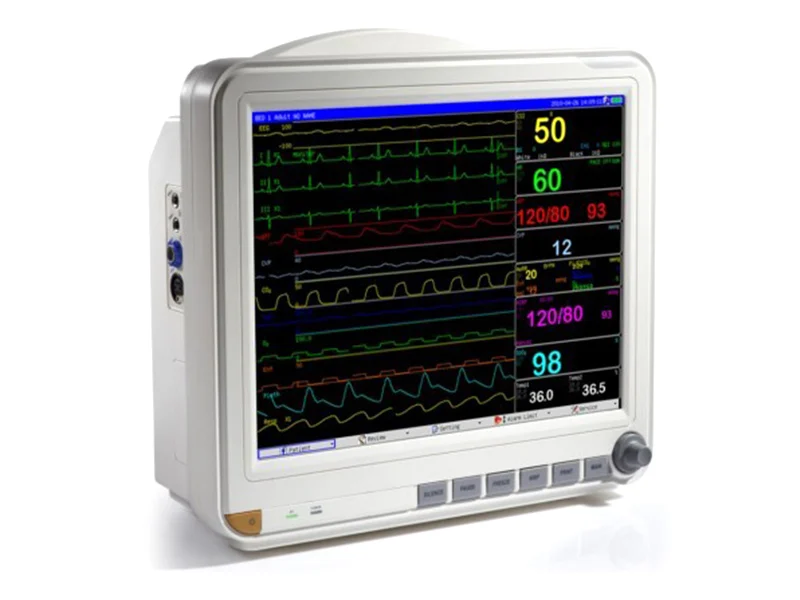
SM-500D Multi-Parameter Monitor
Fifteen-inch monitor for ICU and theatre, with optional anaesthetic gas monitoring
View details →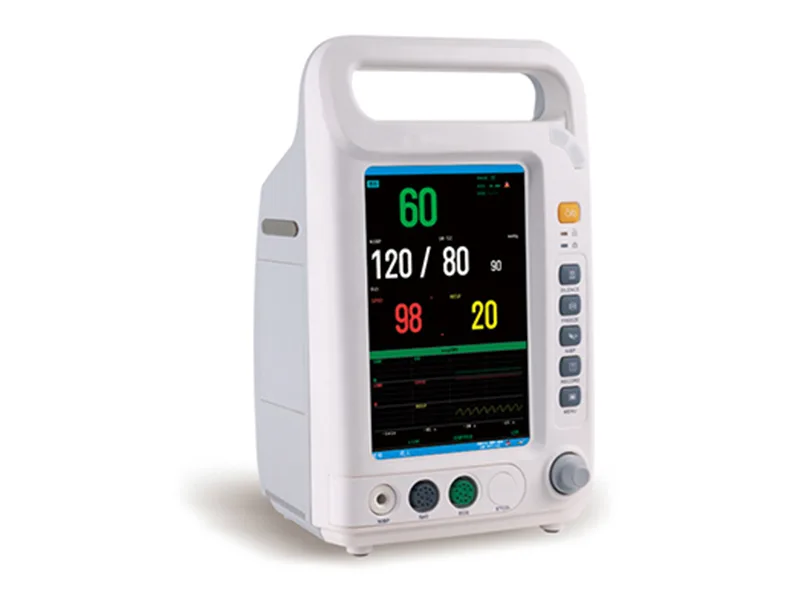
SM-500M Multi-Parameter Monitor
Compact seven-inch portrait monitor for ambulance, theatre and bedside transport
View details →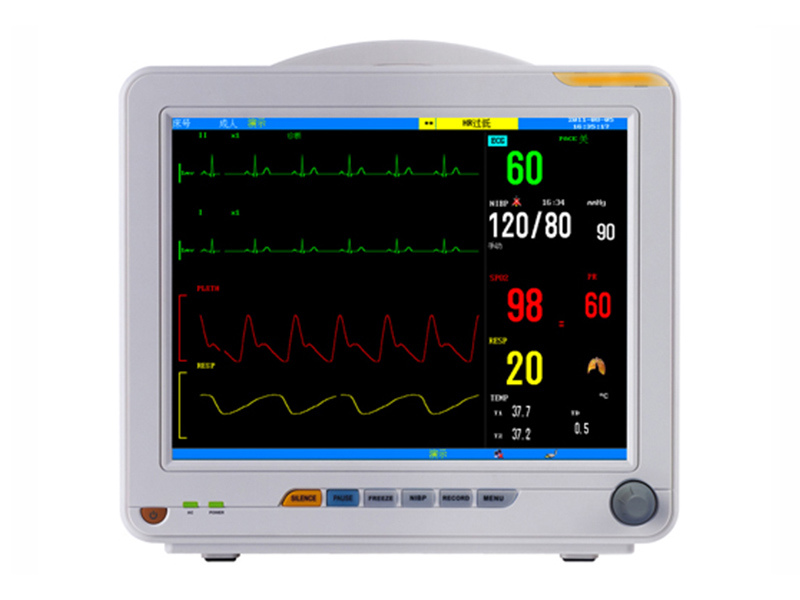
SM-500S Portable Multi-Parameter Monitor
Portable twelve-inch six-parameter monitor for ward, ICU and theatre
View details →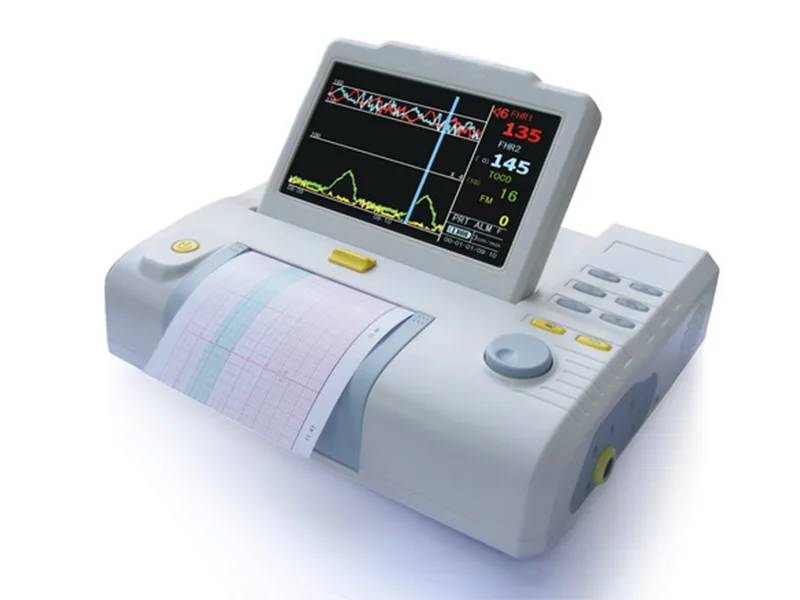
SM-90 Fetal Monitor
Fetal monitor with a folding 7-inch touch screen and a built-in 152 mm thermal printer
View details →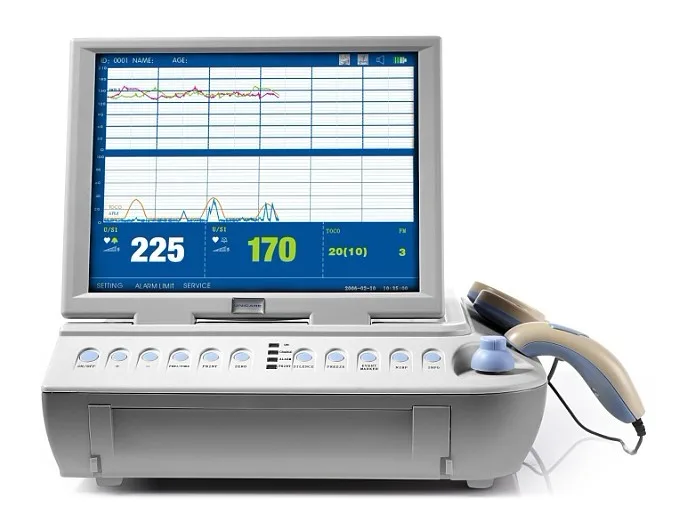
SM-100 Fetal Monitor
Fetal monitor with a 12.1-inch flip screen and a twelve-crystal wide-beam Doppler probe
View details →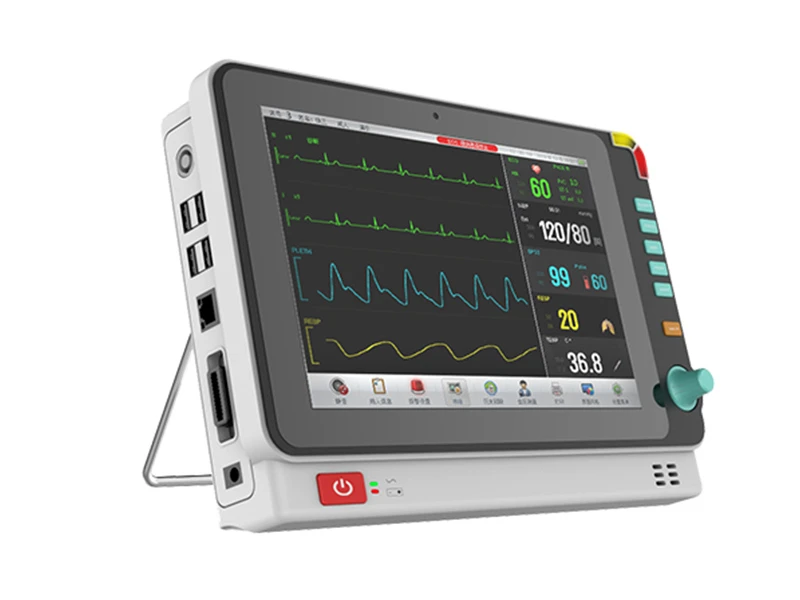
SM-100T Multi-Parameter Monitor
Six-parameter bedside monitor with a 10-inch screen, one-hour waveform review and 720-hour storage
View details →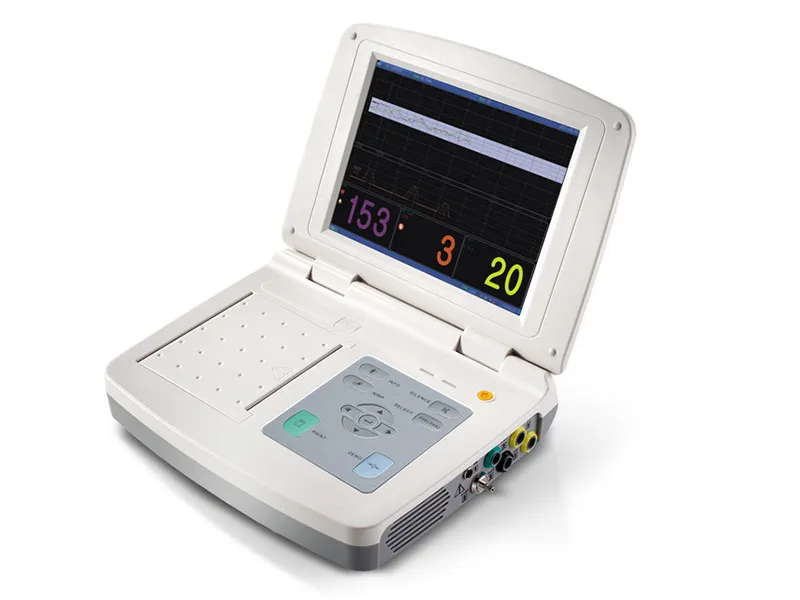
SM-110 Fetal Monitor
Fetal monitor with a 10.1-inch tilting screen, twin heart rate identification and 24-hour replay
View details →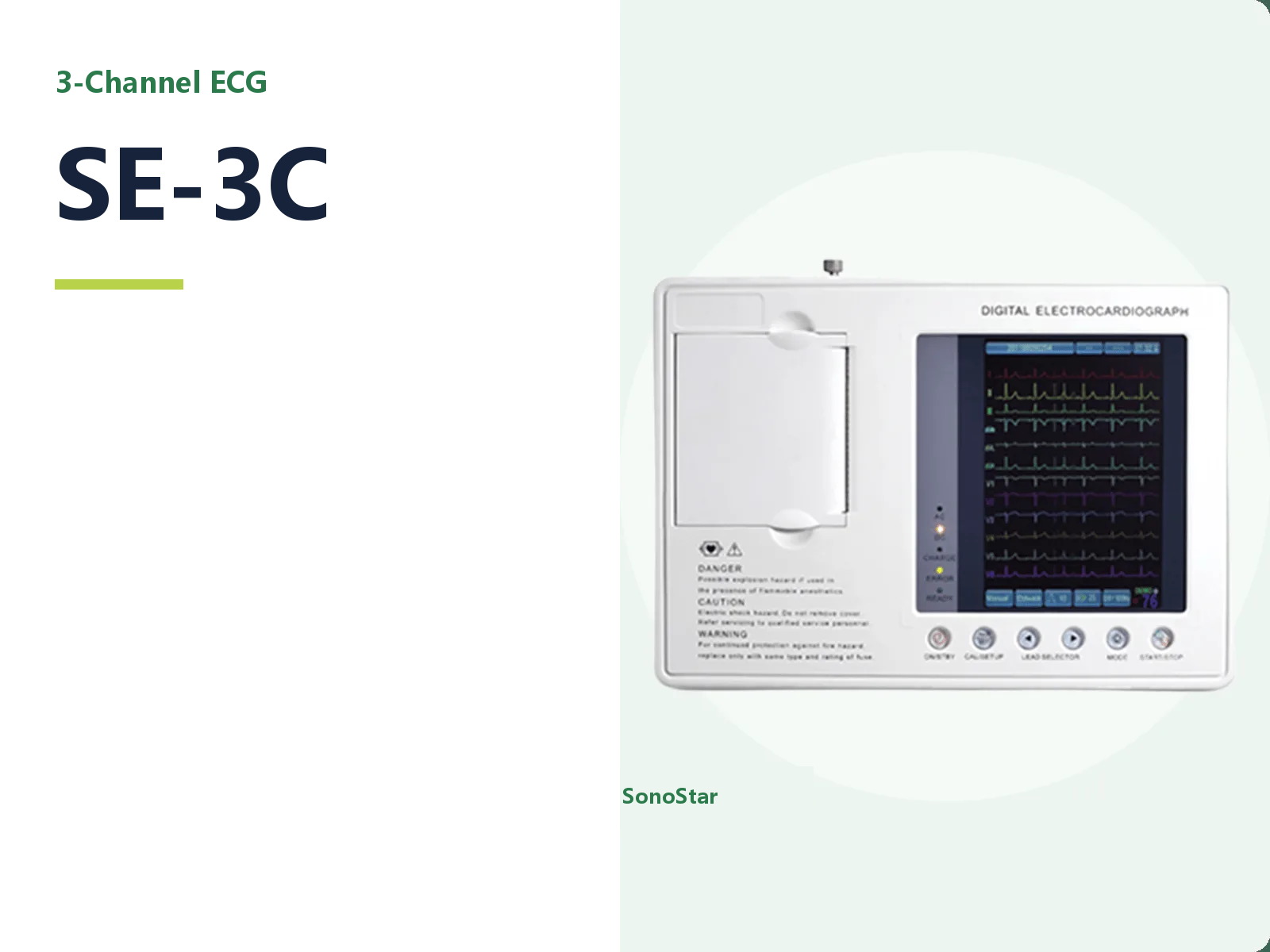
SE-3C Digital 3-Channel ECG Machine
Three-channel ECG machine with a 7-inch colour screen, 80 mm paper and AC/DC power
View details →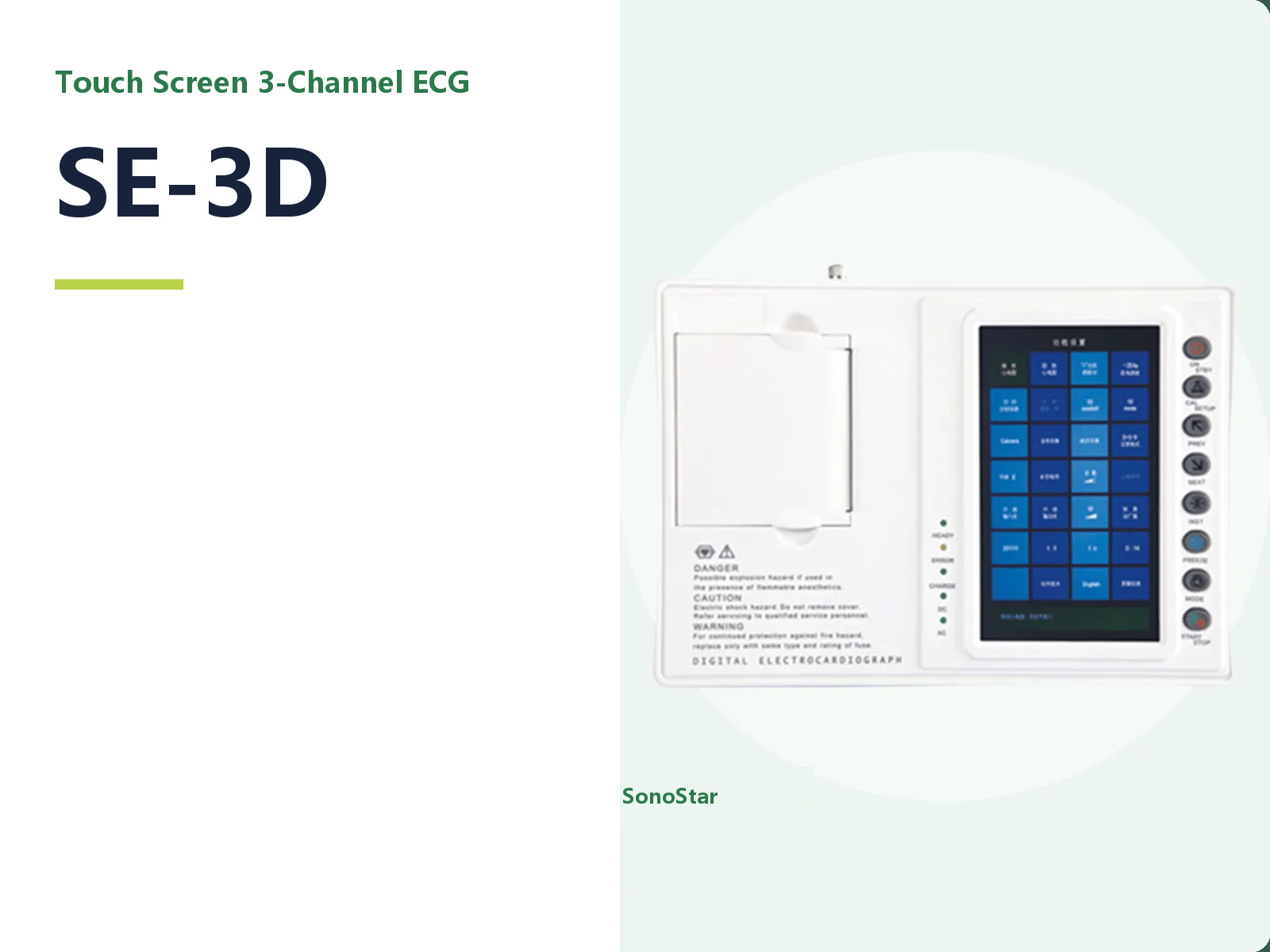
SE-3D Touch Screen Digital 3-Channel ECG Machine
Touch-screen three-channel ECG machine with a 7-inch colour screen and 80 mm paper
View details →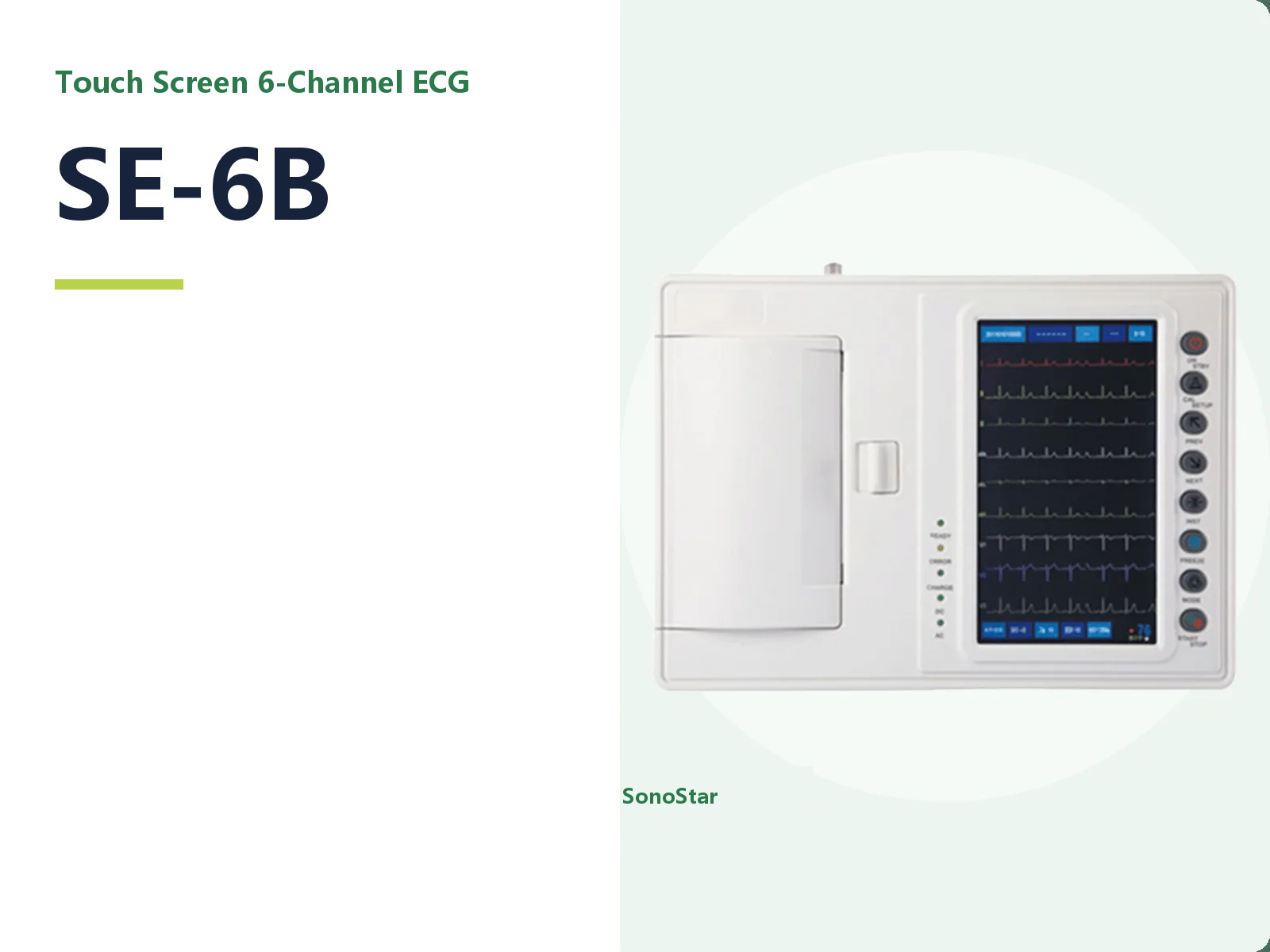
SE-6B Touch Screen Digital 6-Channel ECG Machine
Touch-screen six-channel ECG machine with a 7-inch colour screen and 112 mm paper
View details →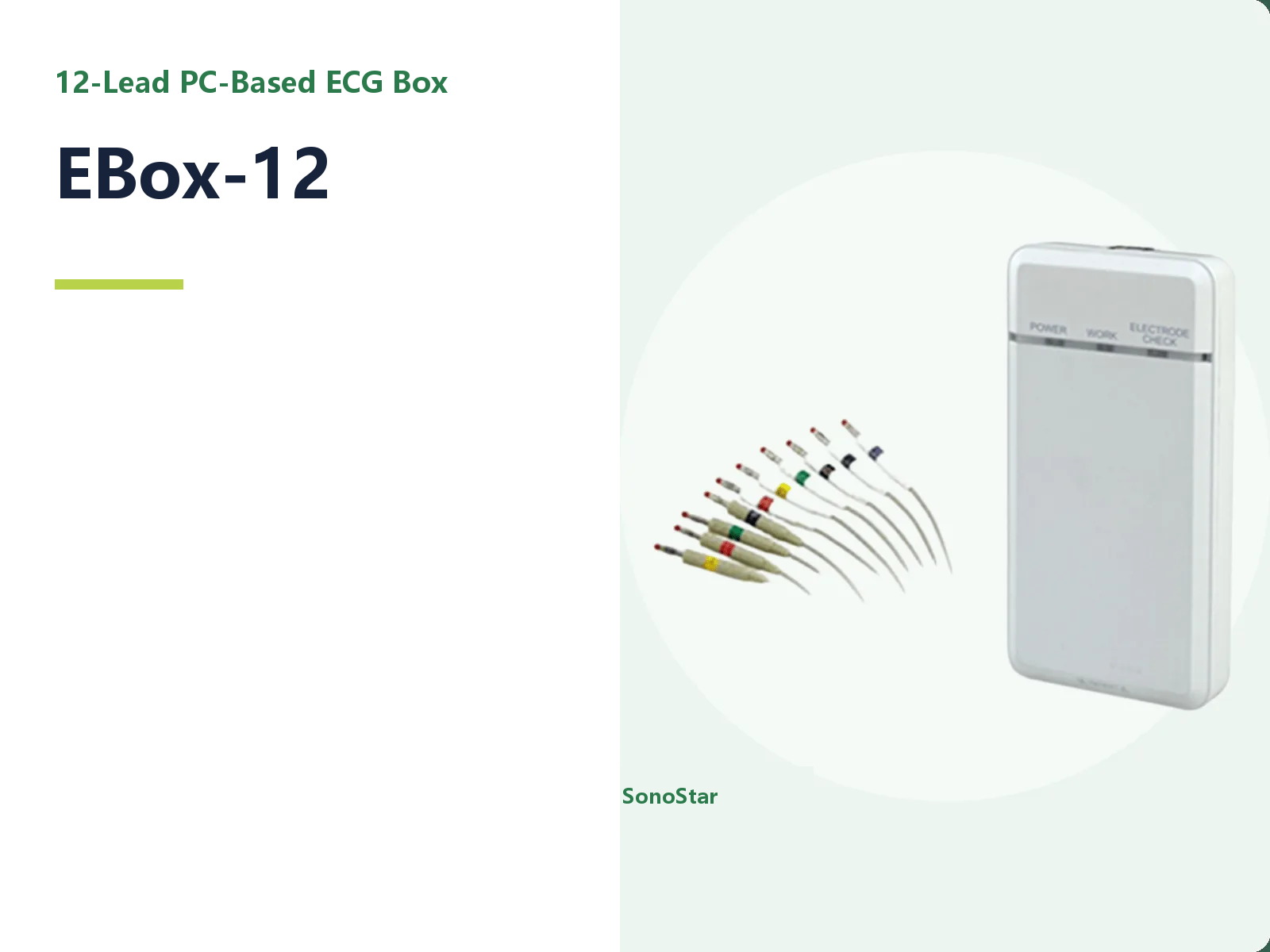
EBox-12 12-Lead PC-Based ECG Box
ECG acquisition box that turns a PC into a 12-lead electrocardiograph
View details →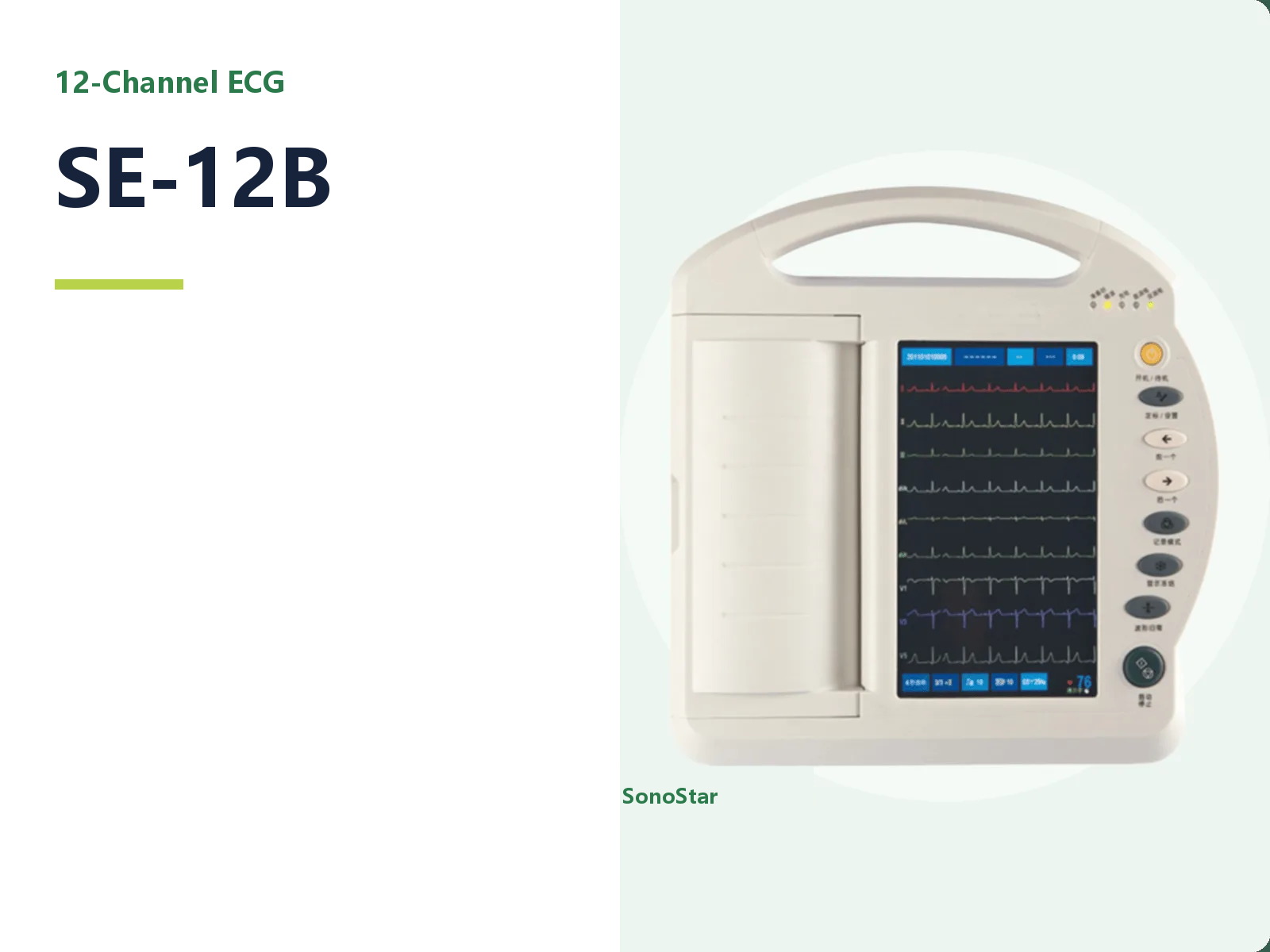
SE-12B Digital 12-Channel ECG Machine
Standalone 12-channel ECG machine with touch screen and V1/V3/V5 screening mode
View details →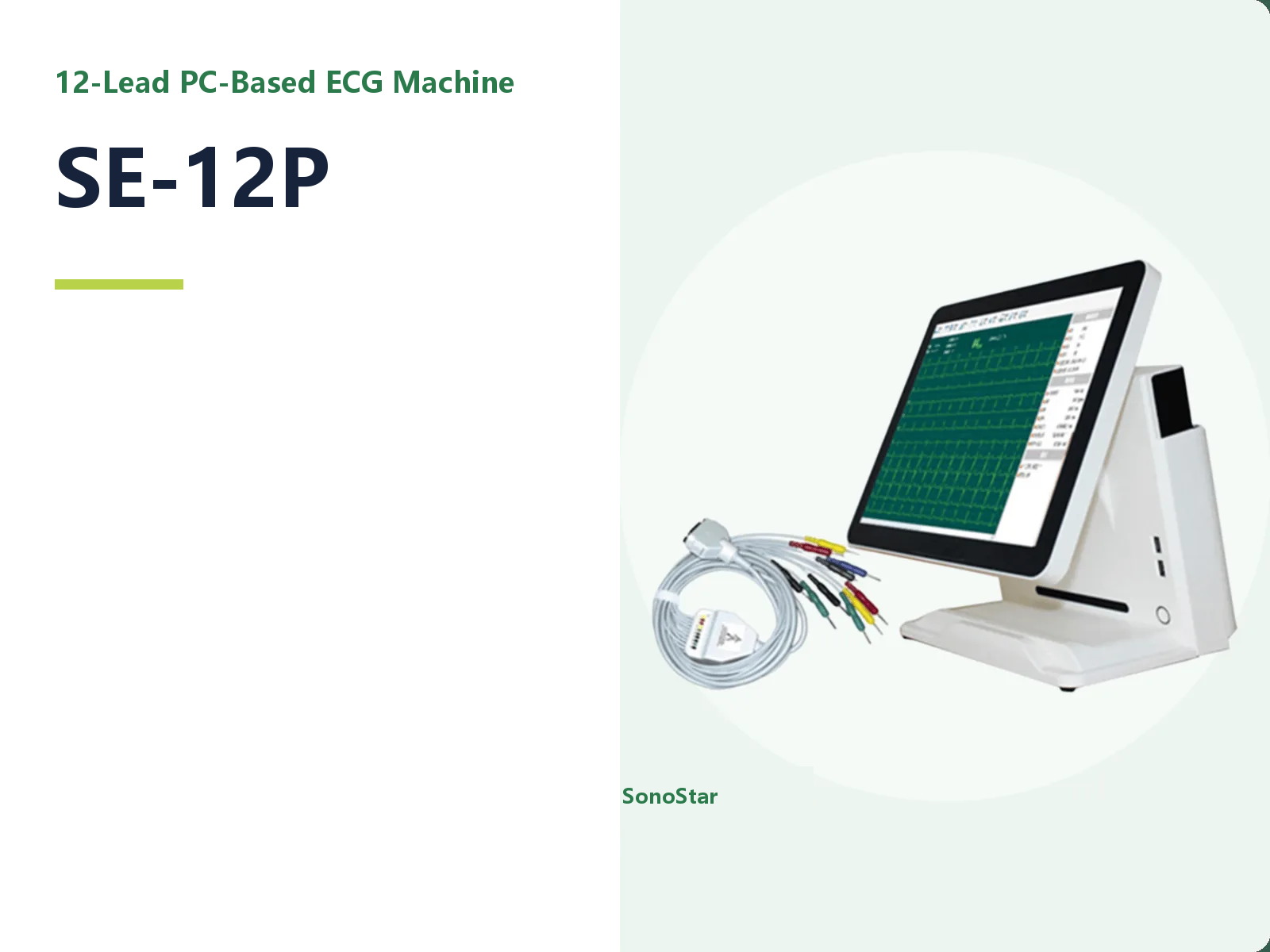
SE-12P 12-Lead PC-Based ECG Machine
15-inch all-in-one 12-lead electrocardiograph on a PC platform, networkable
View details →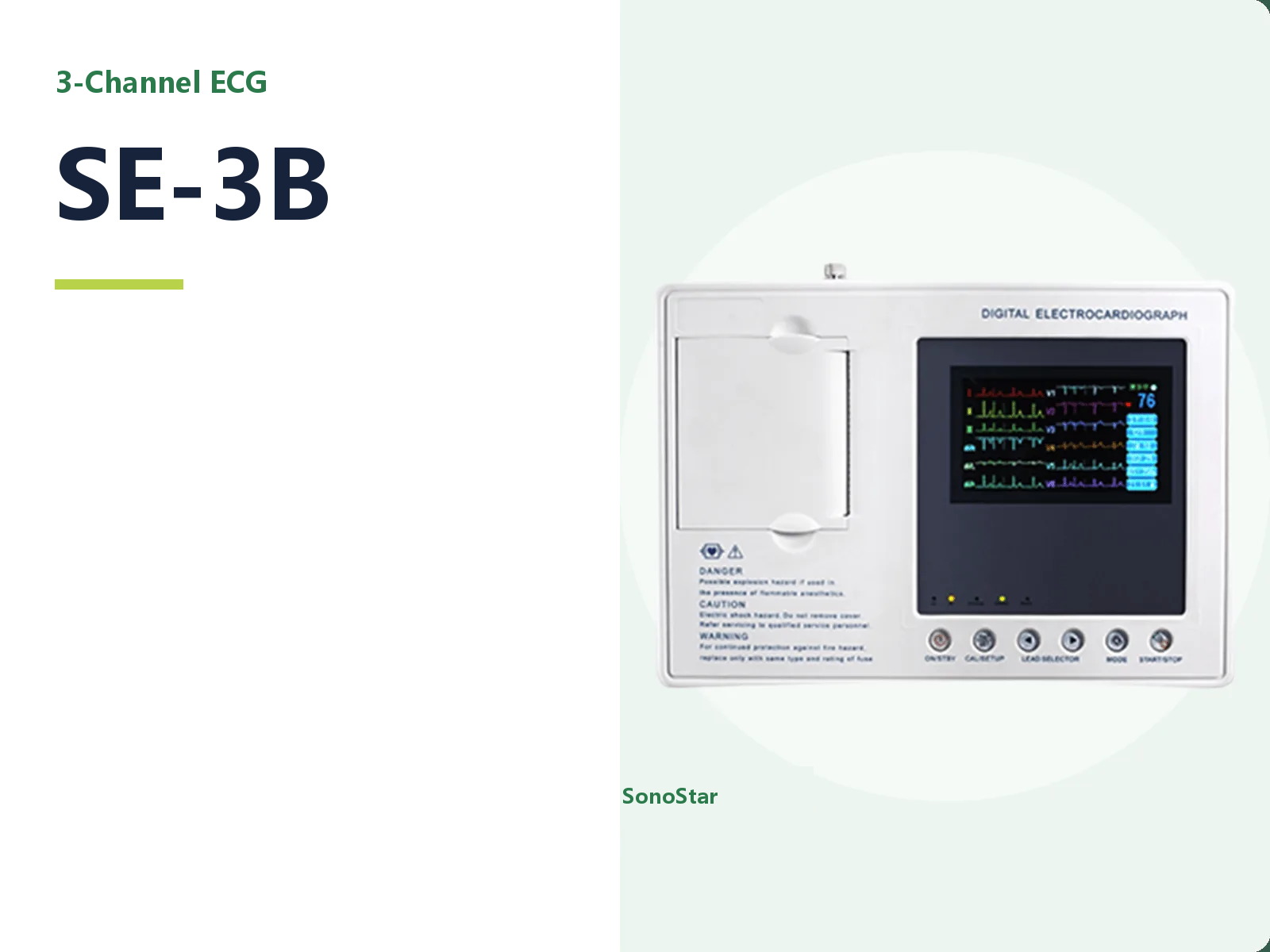
SE-3B Digital 3-Channel ECG Machine
Three-channel ECG machine with a 7-inch colour screen and 12-lead simultaneous acquisition
View details →Frequently asked questions
Common questions about products and selection
Which device types does this section cover?
Three groups: ECG machines and ECG boxes (acquisition, analysis and reporting of 12-lead ECG signals); multi-parameter monitors (continuous monitoring of ECG, heart rate, blood pressure, SpO2, respiration and temperature); and fetal monitors (fetal heart rate, uterine contraction pressure and fetal movement).
How many channels does an ECG machine need?
Three- or six-channel units are enough for routine outpatient and health-check work; choose a 12-channel model where the full 12 leads must be viewed together or long arrhythmia analysis is required.
How does an ECG box differ from an all-in-one ECG machine?
An ECG box works with a computer, which suits sites that already have a PC and ECG software; an all-in-one unit has its own screen and printer and is ready out of the box.
Can the devices connect to a hospital system?
USB, SD card and network export are supported, with reports in PDF, JPEG or XML; fetal monitors can connect to a central obstetric station. The exact interface depends on the model and the hospital's system.
Didn't find what you need?
Tell us how you will use the system, and we will propose an ultrasound configuration to match.
Contact us