
Portable Ultrasound
The screen is built into the machine. A portable colour Doppler system packs a colour LCD, several probe sockets and all-digital imaging into one unit you can carry — open the ward door, park the medical cart, connect a probe and you have an image, without moving the patient to an ultrasound room.
Selection guide · how to choose by setting (click to expand)
Clinical departments
Emergency, ICU, obstetrics and gynaecology, urology, cardiovascular, small parts, paediatrics, rehabilitation and orthopaedic surgery, as well as primary care, community clinics, health-screening centres, medical carts and ward rounds — covering everything from routine screening to bedside emergency assessment.
Examination areas
The probe you fit decides what you can examine:
- Abdomen and obstetrics | convex probe: liver, gallbladder, spleen, pancreas, kidney, gynaecology, obstetrics, urinary tract.
- Cardiac and cranial | phased array probe: cardiac structure and blood flow.
- Superficial and musculoskeletal | high-frequency linear: thyroid, breast, small parts, peripheral vessels, nerve, muscle and bone.
- Endocavity and transrectal | endocavity or rectal probe: transvaginal and transrectal examinations.
- Interventional guidance: ultrasound-guided needle placement.
Device types and configurations
10 models, from a 10-inch entry-level greyscale unit to a 15-inch all-digital colour system — matched to the application and the budget.
| Model | Display | Probe sockets | Main unit weight | Imaging modes | Notes |
|---|---|---|---|---|---|
| C10 | 15-inch colour or larger | 2 or more | 7.5 kg | B, M, PW, Color, PDI | All-digital imaging; 9 probe types optional |
| C10B | 15-inch | 2 or more | 8.4 kg | B, M, Color, PDI, PW | Physical channels 64 or more, elements 128 or more |
| C8 | 15-inch | Multiple | — | B, M, PW, Color, PDI | Panoramic imaging, B/Color/PW triplex, speckle reduction |
| CTouch-10 | 15-inch | Multiple | 6.1 kg | B, B/M, B+Color, B+PDI, B+PW | 1 wireless probe included; single- or dual-head probes optional |
| SS-10 | 15-inch | Two | — | B, 2B, 4B, M, B/M | 6000 mAh battery, 4.5 hours of use; four-stage electronic focus |
| SS-7C | 15-inch LED | Multiple | — | B, B+B, B+M, M, 4B, PW | Recognises 80 / 96 / 128-element probes; multi-language interface |
| SS-8C | 15-inch | Multiple | — | B, M, 2B, B/M, 4B, PW | 256 grey levels; maximum scanning depth 300 mm |
| SS-9B | 15-inch | 2 | — | B, B+B, 4B, B+M, PDI, PW, THI | Scanning depth 2-28 cm; DICOM supported |
| SS-6 | 12-inch | Two probe sockets | — | B, B/B, 4B, B+M, M | Convex / micro-convex / linear probes; two USB ports |
| SS-5 | 10-inch greyscale | One | — | B, B/B, 4B, B+M, M | 3.5 MHz electronic convex; entry-level greyscale unit |
Key specifications
- Display: 10 / 12 / 15-inch depending on model, medical colour LCD
- Imaging modes: B, B+B, 4B, B+M, M, Color (colour Doppler), PDI (power Doppler), PW (pulsed-wave Doppler), THI (tissue harmonic imaging)
- Digital imaging techniques: multi-beam formation, real-time point-by-point dynamic focusing, pulse inversion harmonic imaging, spatial compounding, image enhancement and noise reduction, speckle reduction
- Probe compatibility: the main unit recognises 80 / 96 / 128-element probes automatically and accepts convex, linear, micro-convex, phased array, endocavity and rectal probes
- Maximum display depth: 350 mm or more (C10); 2-28 cm (SS-9B); 300 mm (SS-8C)
- Image output: USB, HDMI, VGA and composite video, with DICOM 3.0 network support
- Battery: 6000 mAh (SS-10) / 7000 mAh or more (C10), 2 to 4.5 hours of use depending on model
- Interface languages: Chinese, English and other languages
Where it fits
- Primary care facilities (township health centres, community health centres): routine abdominal, obstetric and gynaecological, urinary, thyroid and breast examinations.
- Private clinics and health-screening centres: general routine screening and health checks.
- Hospital clinical departments (emergency, ICU, obstetrics and gynaecology, urology, cardiovascular, rehabilitation, orthopaedic surgery): bedside examination and follow-up.
- Mobile settings (medical carts, house calls, ward rounds).
How it differs from our other ultrasound ranges
Our three ultrasound ranges are divided by where they are used, and they are not interchangeable:
- Handheld Ultrasound — the probe is the system, there is no separate main unit and the image is shown on a phone or tablet: the lightest option, for bedside work and mobile use.
- This range — its own colour LCD and several probe sockets: a range of probes covers whole-body examinations, for outpatient rooms, wards and house calls.
- Trolley Ultrasound — a cart-mounted system with a larger screen: routine examinations in a fixed consulting room.
Selection starts with two questions: is there a reasonably fixed place of work, and will several probes be needed at the same time?
Common purchasing questions
Q: How do I choose between portable and handheld?
A: It comes down to whether you need a larger screen and more probes. Where several probes, a bigger display and full workstation functions matter, choose portable; for quick bedside assessment and the lightest possible kit, choose handheld.
Q: Can it take the probes I need?
A: Convex, linear, micro-convex, phased array, endocavity and rectal probes are all available; the exact options for each model are listed in its configuration sheet.
Q: Greyscale or colour?
A: For looking at organ morphology and routine screening, a greyscale unit is sufficient; where blood flow has to be seen, such as vascular or cardiac work, choose a colour model with Color / PDI / PW.
Q: Can it produce reports and connect to the hospital system?
A: Report editing and printing are supported; models such as the SS-9B support DICOM 3.0 and can connect to a hospital network. The exact functions depend on the model selected.
Q: Is the battery enough?
A: Depending on model, 2 to 4.5 hours of use; some models accept swappable batteries.
The information on this page is a technical reference based on product specifications; the applicable scope is that stated in the product registration certificate. Contraindications and precautions are set out in the product manual, and the device must be operated by a licensed physician holding the relevant qualifications. Nothing on this page constitutes a claim of clinical efficacy.
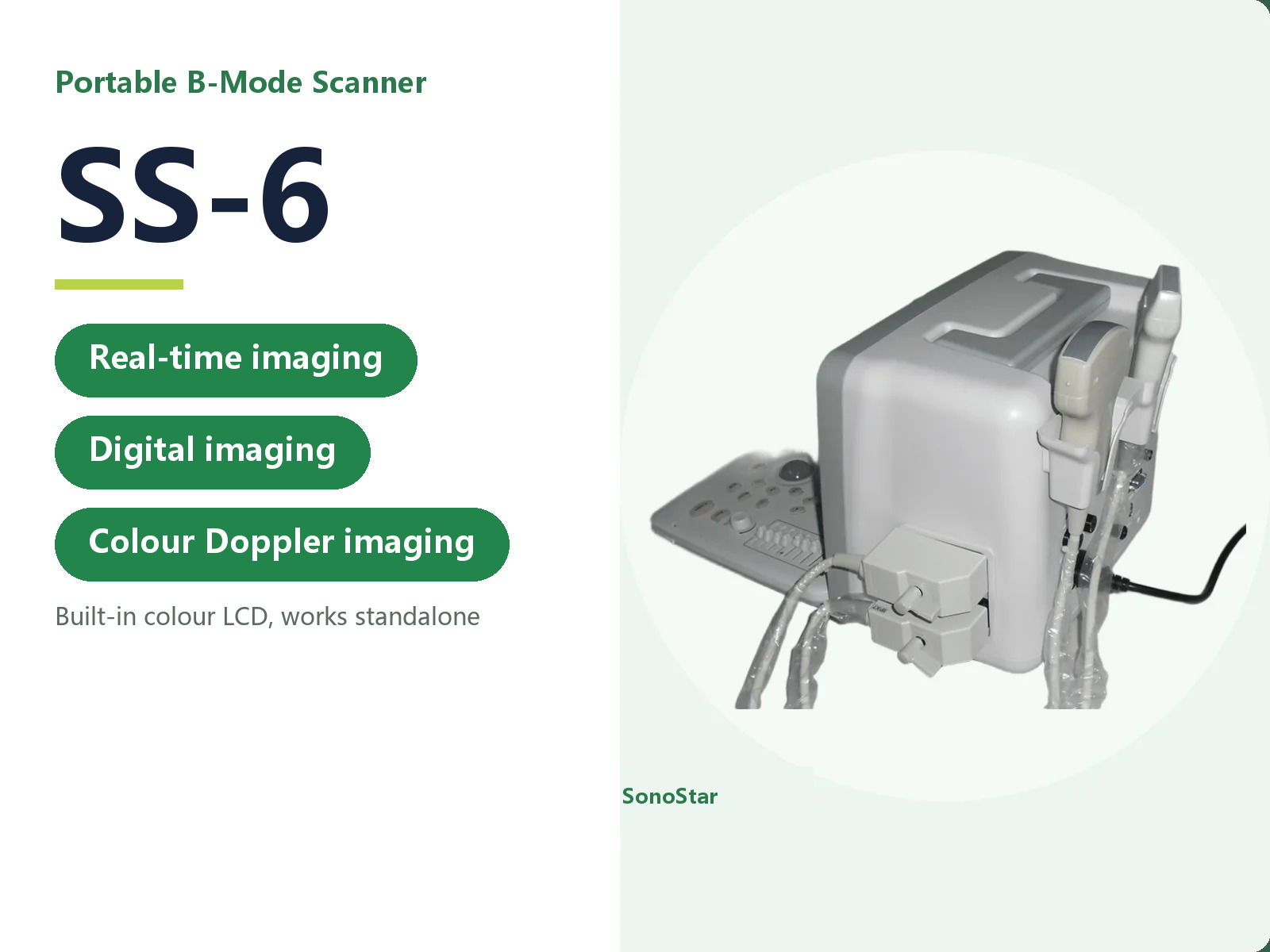
SS-6 Portable B-Mode Ultrasound Scanner
12-inch all-digital portable B-mode scanner with two probe sockets
View details →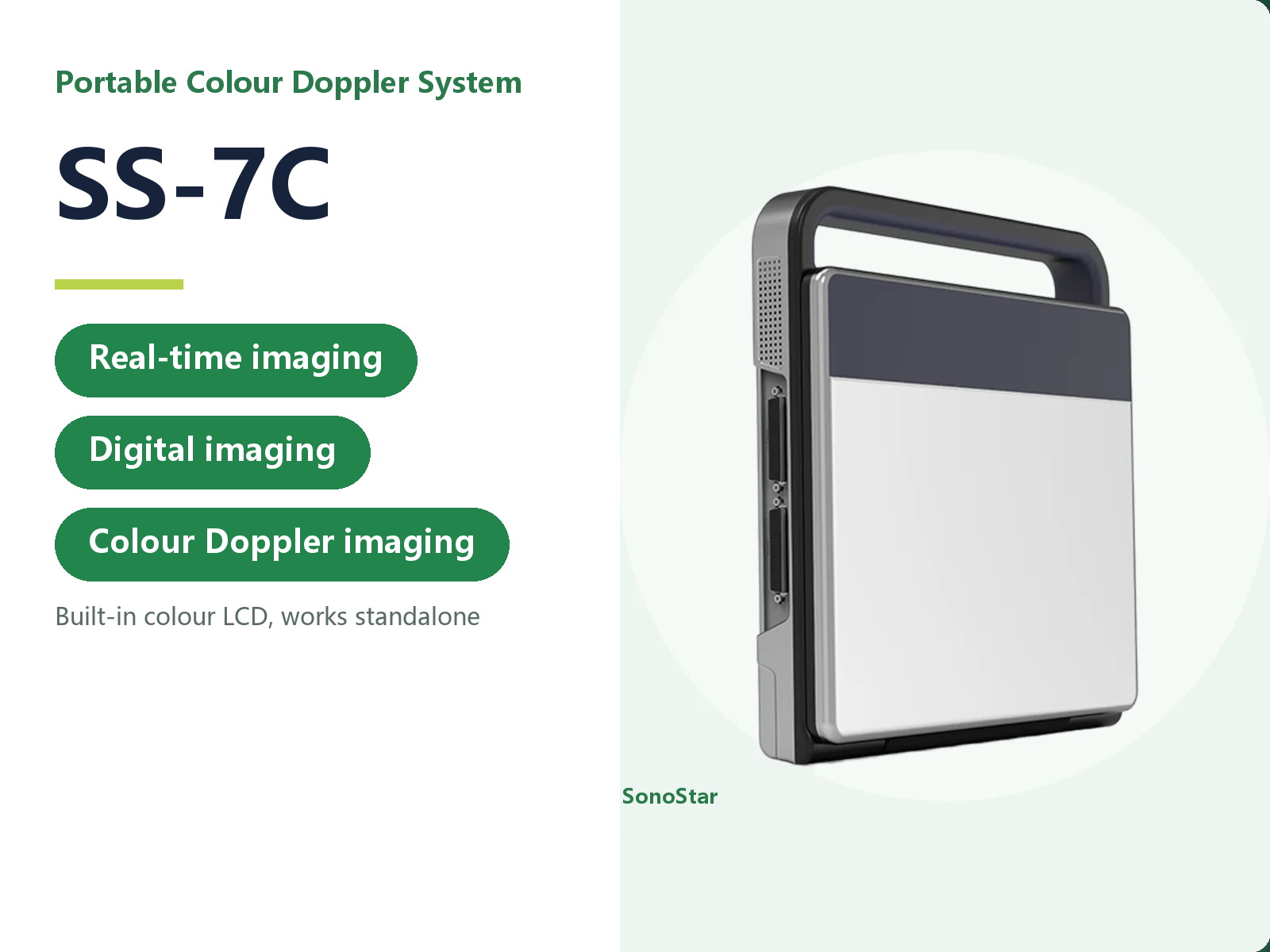
SS-7C Portable Colour Doppler Ultrasound System
15-inch 1024 x 768 LED screen with presets and one-key optimisation
View details →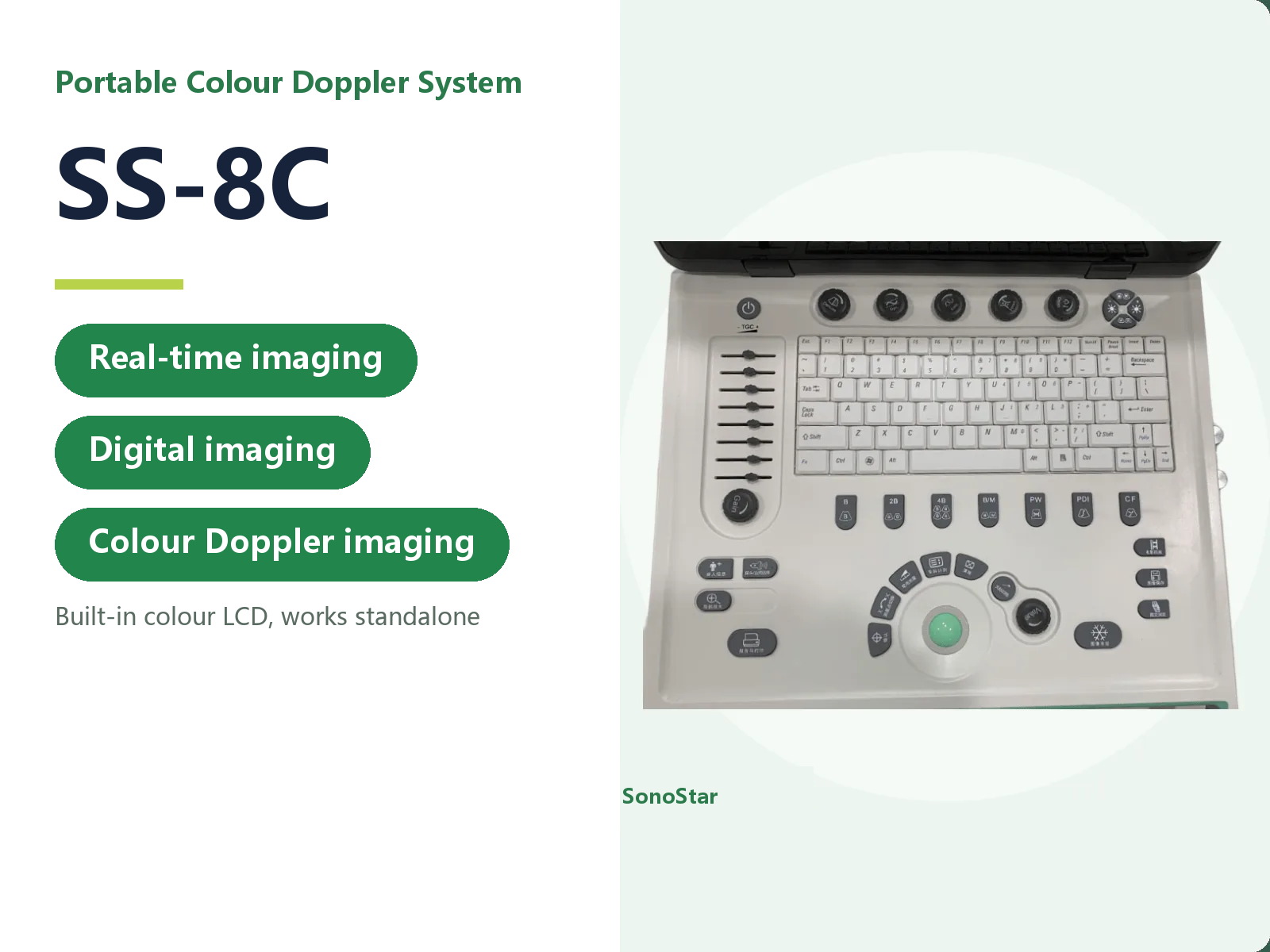
SS-8C Portable Colour Doppler Ultrasound System
15-inch LCD with 256 greyscale levels and wide-angle imaging
View details →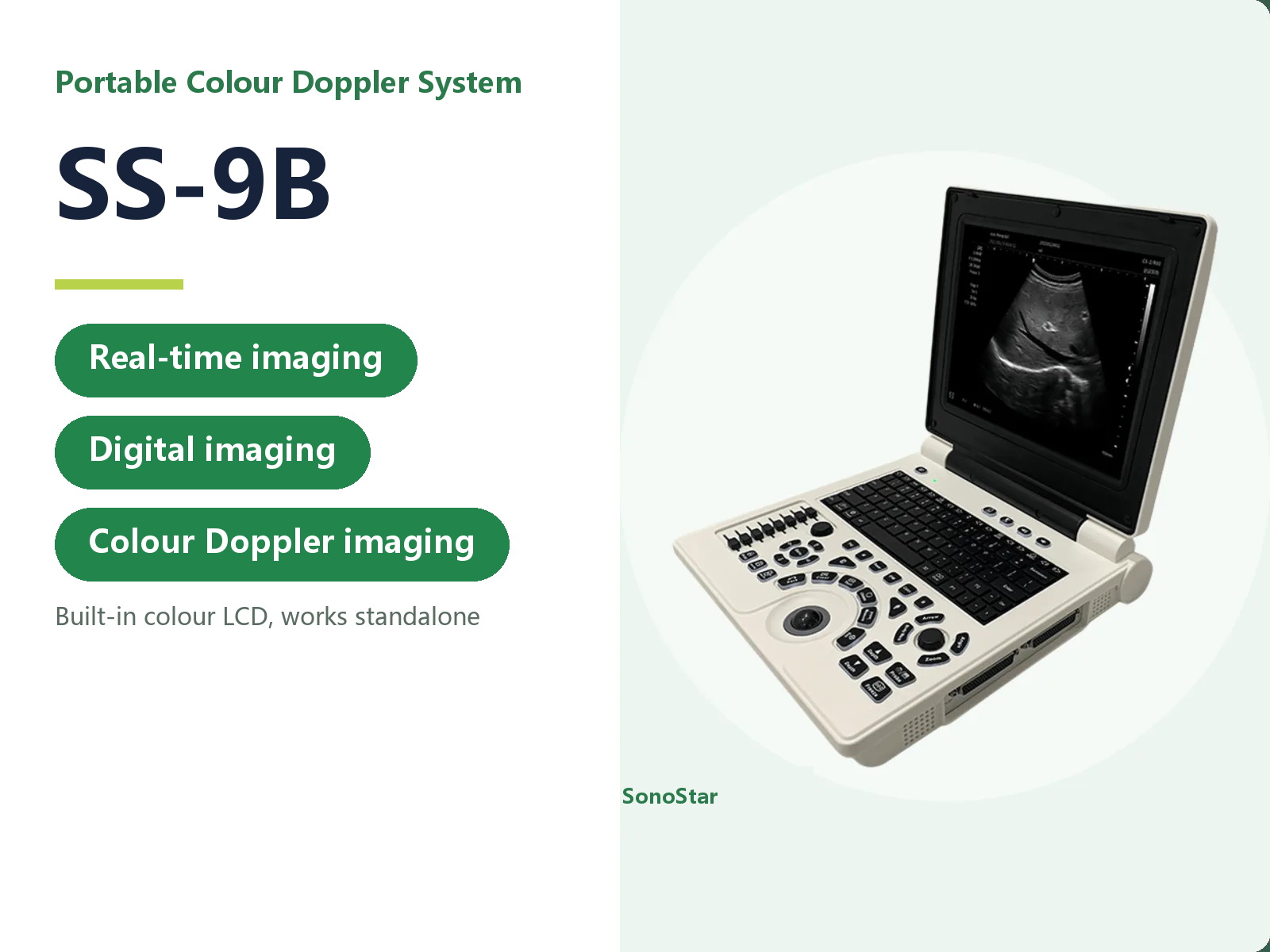
SS-9B Portable Colour Doppler Ultrasound System
12-inch tablet-style console with DICOM archiving and four specialty packages
View details →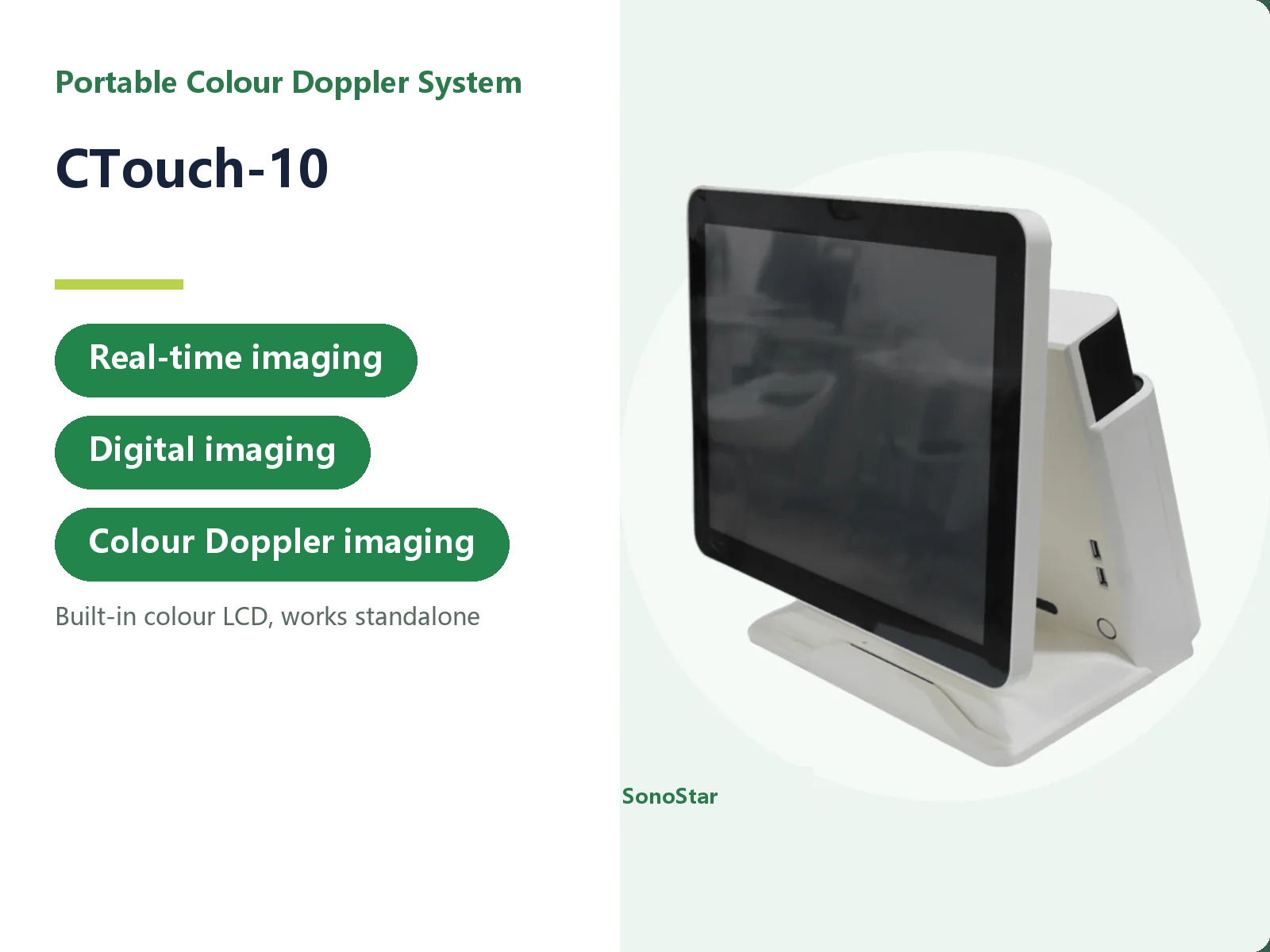
CTouch-10 Portable Colour Doppler Ultrasound System
Touch-screen console with wireless probes, B/B+M/Color/PDI/PW
View details →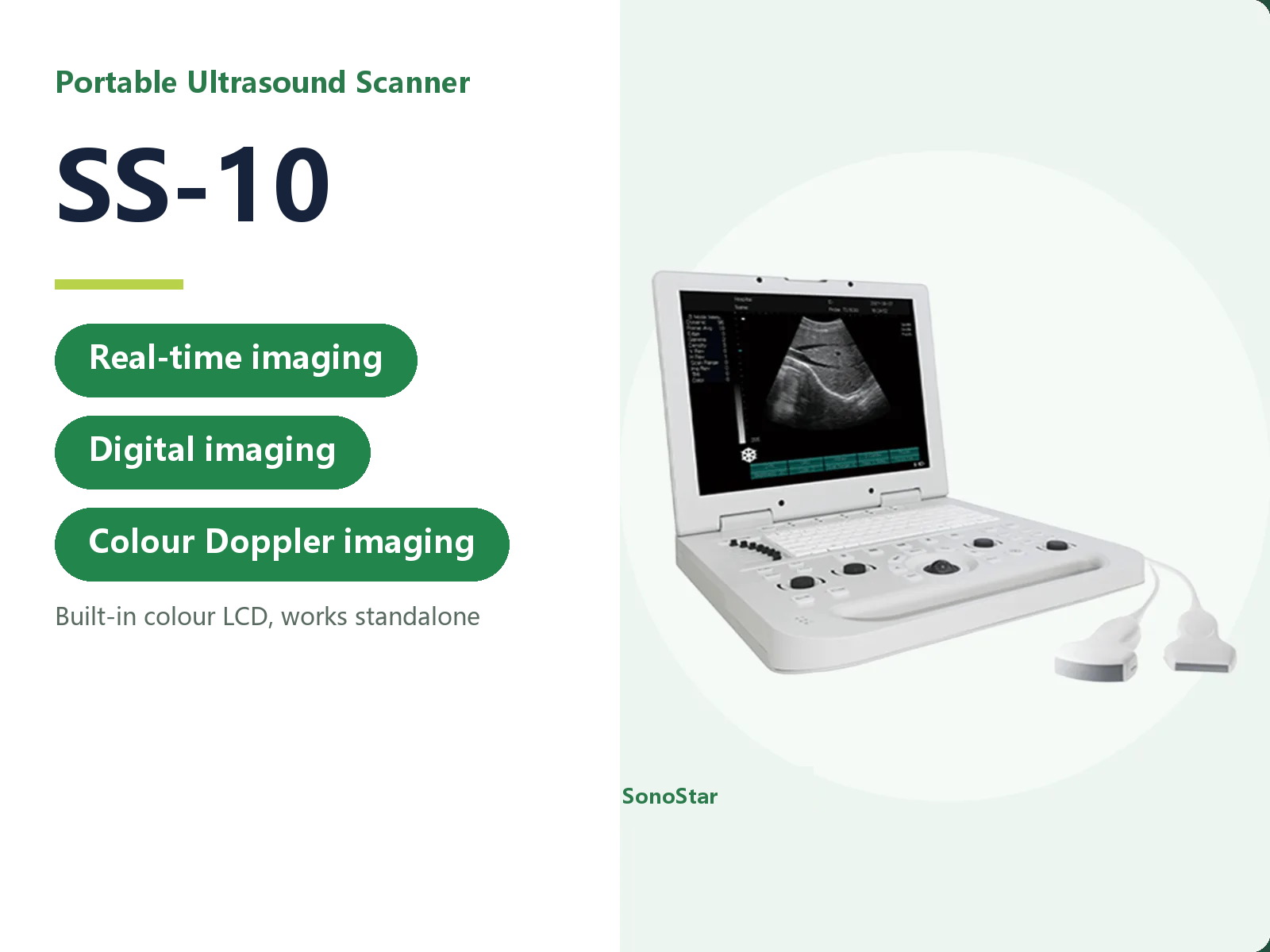
SS-10 Portable Ultrasound Scanner
All-digital portable scanner with a 15-inch LED screen and 4.5-hour battery
View details →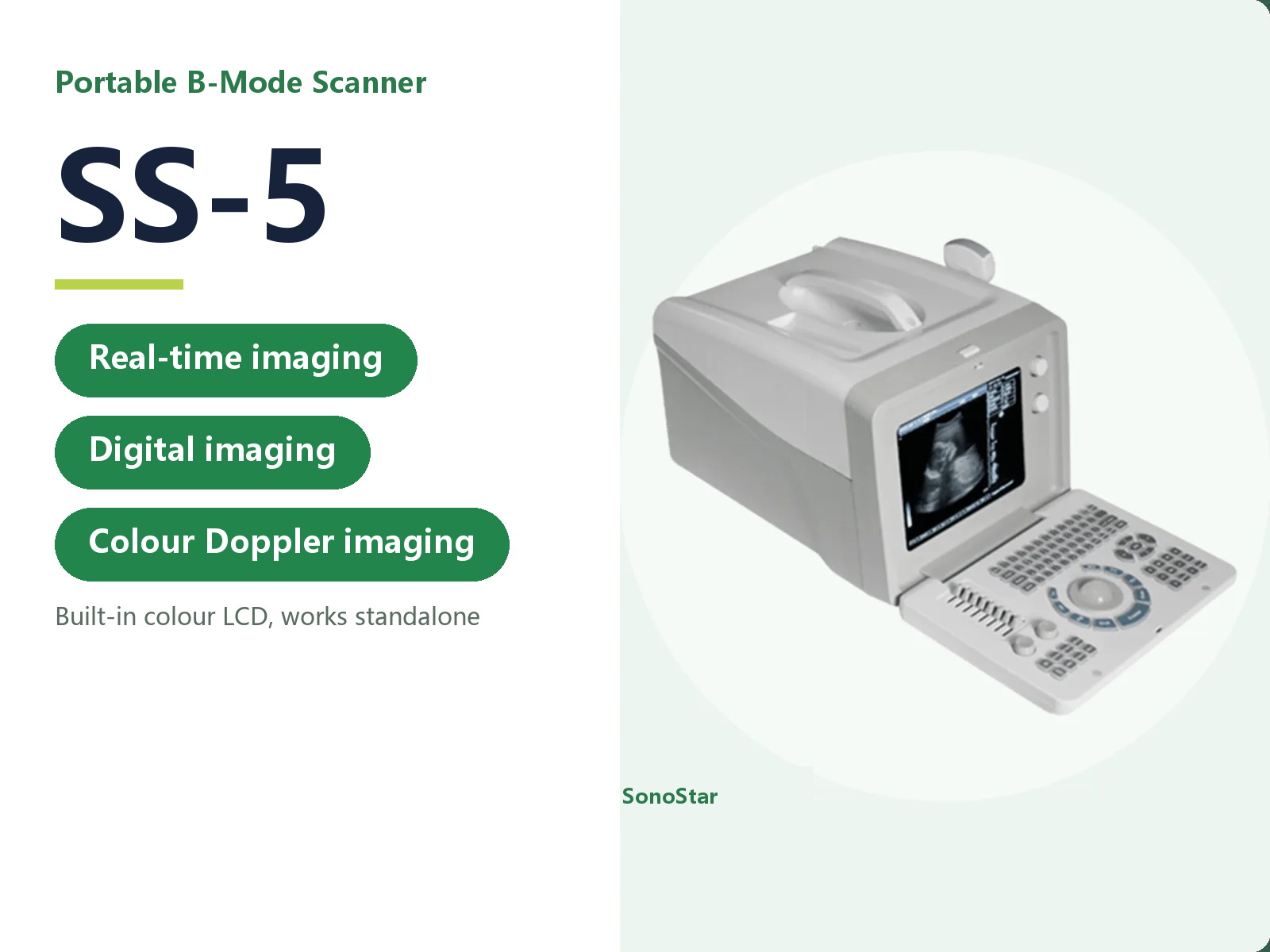
SS-5 Portable B-Mode Ultrasound Scanner
Entry-level portable B-mode scanner with a 10-inch flicker-free display
View details →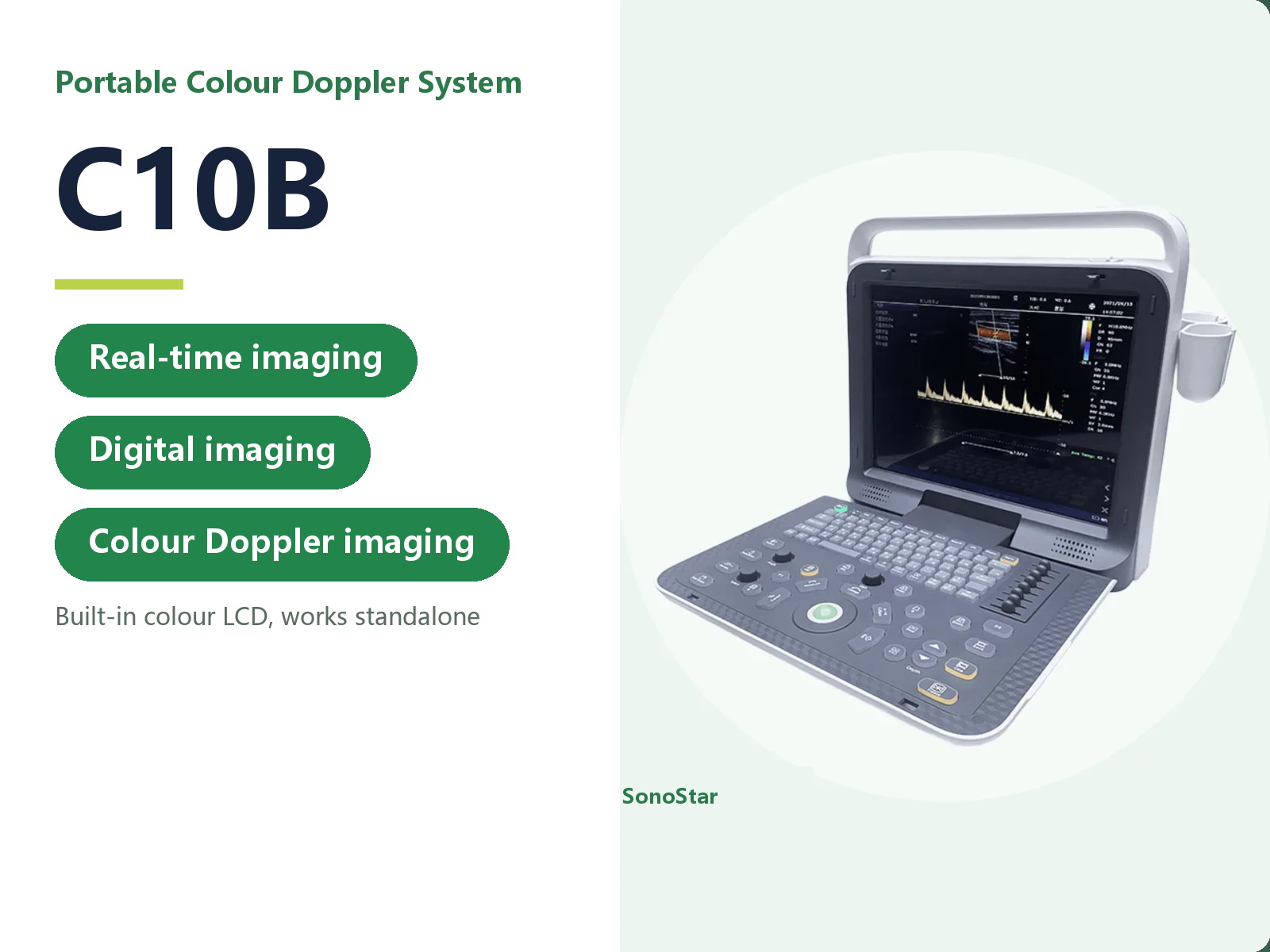
C10B Portable Colour Doppler Ultrasound System
64-channel portable colour Doppler on a Linux + ARM + FPGA platform, with a 15-inch LCD
View details →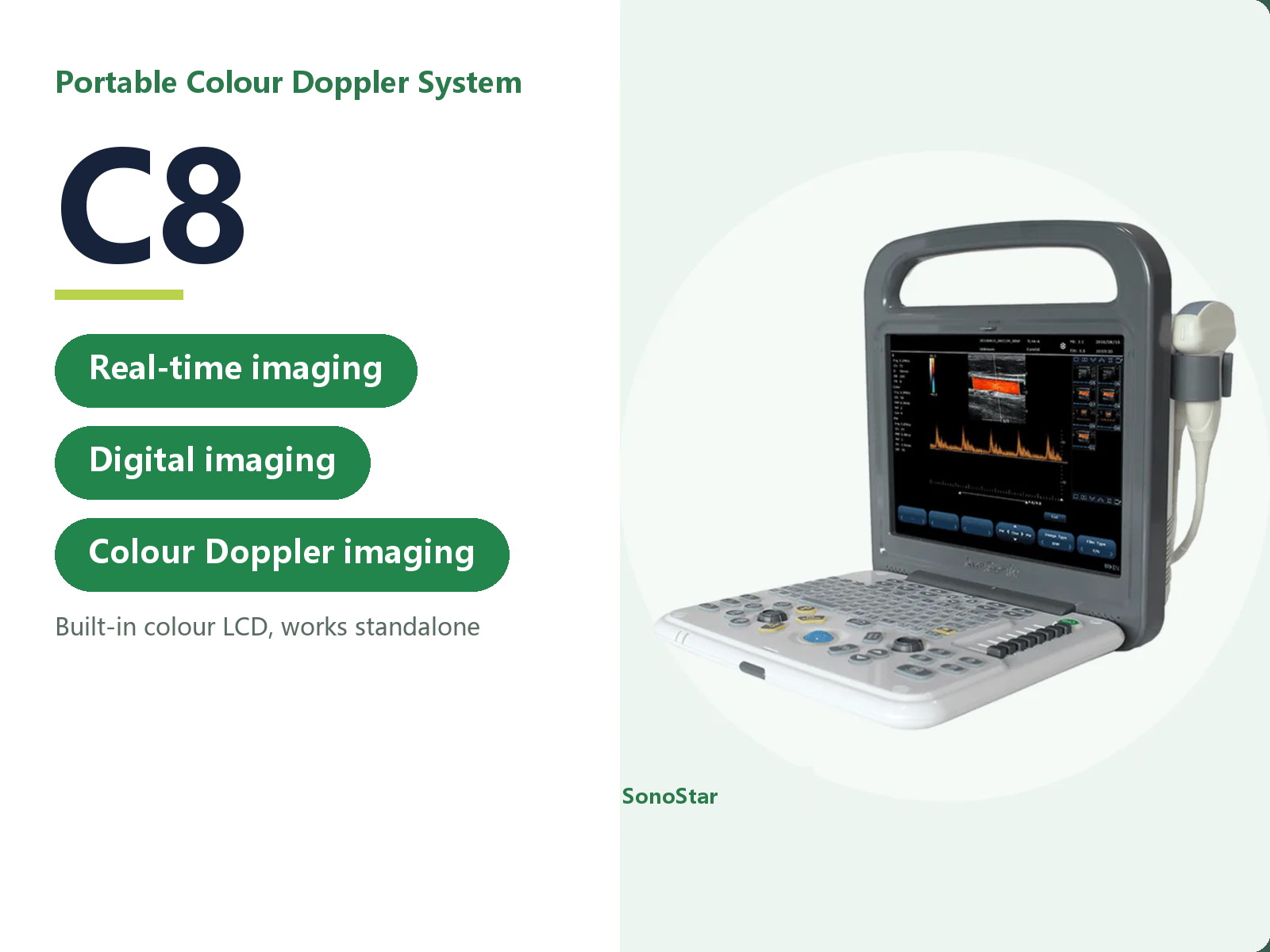
C8 Portable Colour Doppler Ultrasound System
General-purpose portable colour Doppler with panoramic imaging and B/Color/PW triplex
View details →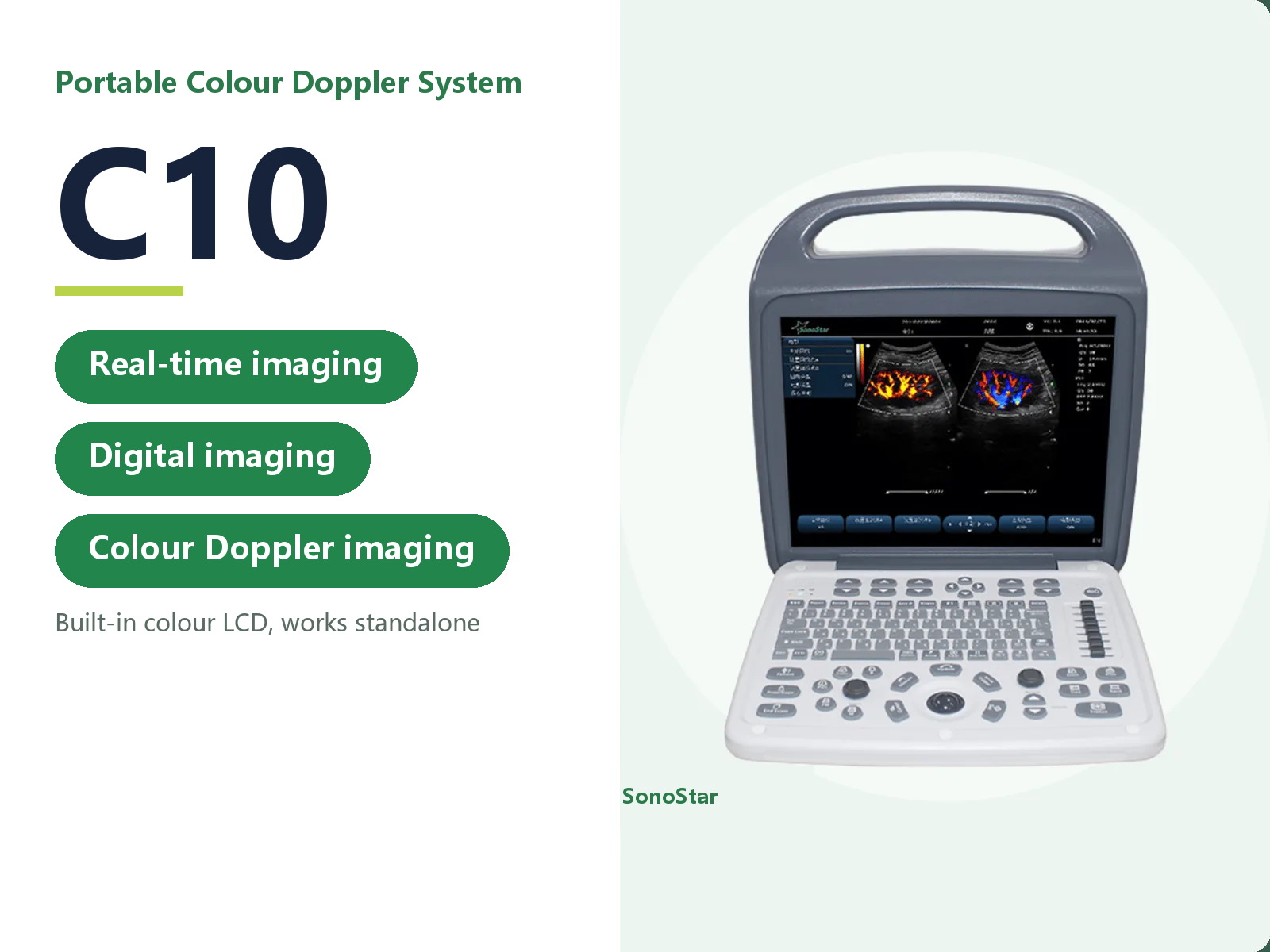
C10 Portable Colour Doppler Ultrasound System
Portable colour Doppler system with a 15-inch medical LCD and two probe sockets
View details →Frequently asked questions
Common questions about products and selection
How does a portable unit differ from the handheld model?
The portable unit carries its colour LCD on the body, with multiple probe ports and fully digital imaging; the handheld model puts the engine inside the probe and displays on a phone or tablet.
Which departments and settings use it?
Emergency, ICU, obstetrics and gynaecology, urology, cardiology, small parts, paediatrics, rehabilitation and orthopaedics, plus primary care, community clinics, health-check centres, medical vehicles and ward rounds.
Which probe covers which site?
A convex probe covers abdominal and obstetric work (liver, gallbladder, spleen, pancreas, kidney, gynaecology, obstetrics, urinary tract). Cardiac and superficial sites use the corresponding dedicated probe.
Is it easy to move around?
The body can be carried by hand. Open the ward door, park the medical cart and connect the probe to start imaging, without moving the patient to an ultrasound room.
Didn't find what you need?
Tell us how you will use the system, and we will propose an ultrasound configuration to match.
Contact us